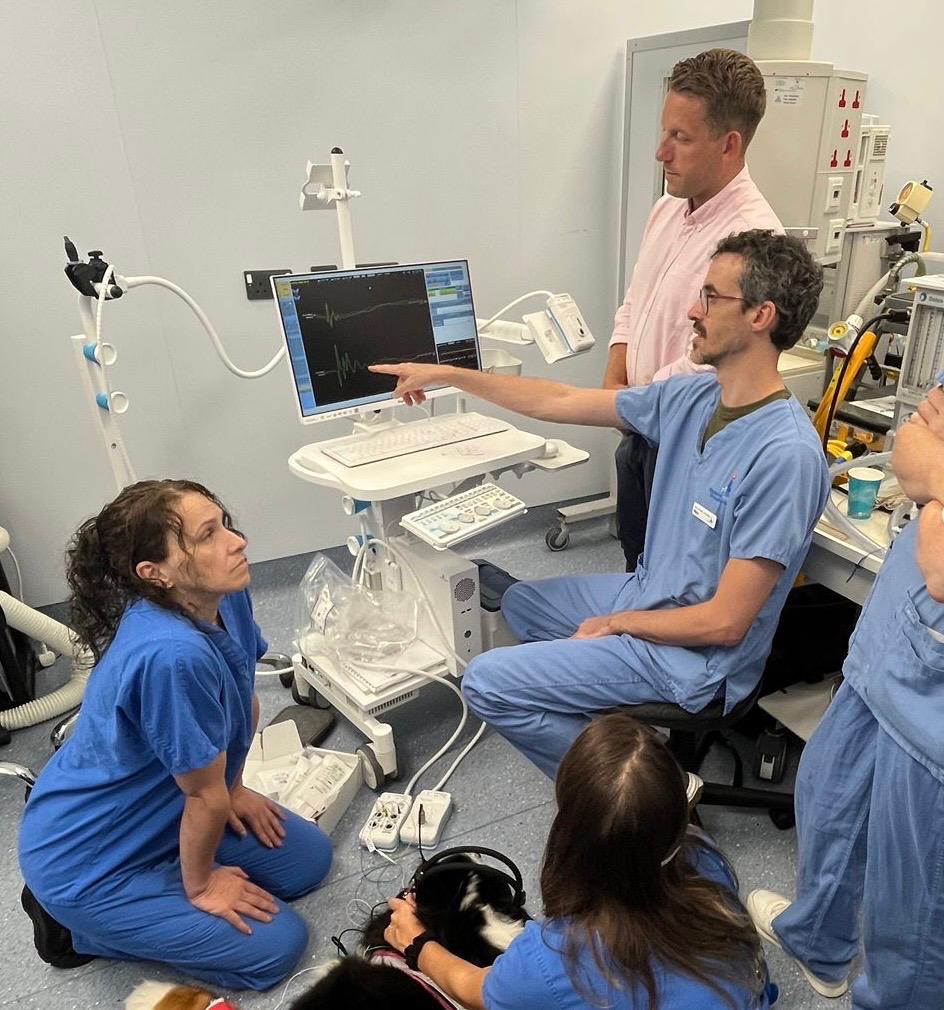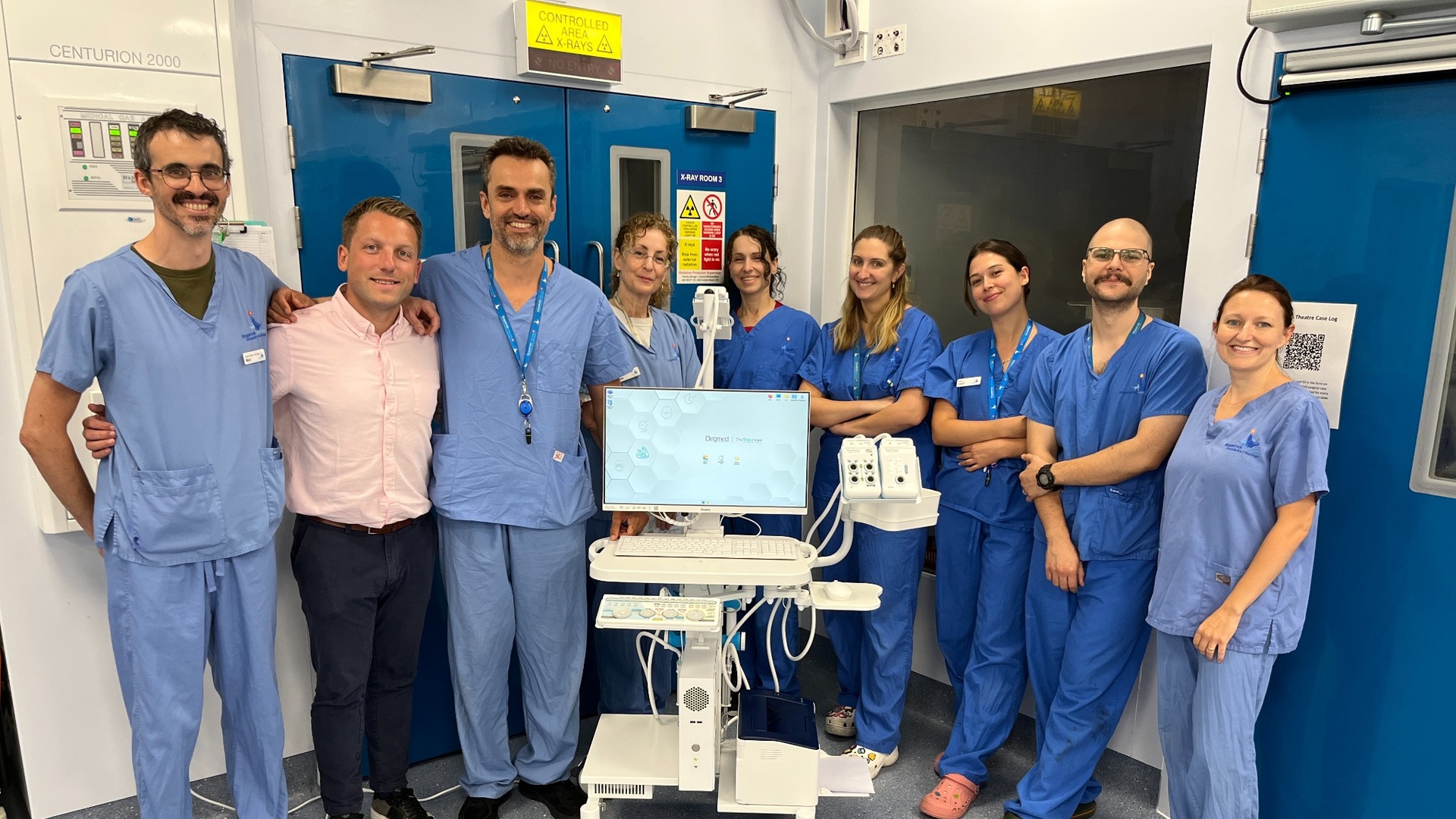
Fitzpatrick Referrals has recently upgraded its electrodiagnostic equipment, further enhancing our neurology team’s ability to investigate complex conditions affecting the peripheral nervous system in dogs and cats.
Senior Neurologist Dr Katia Marioni-Henry explains more about our new equipment and the range of conditions it can help us investigate below.
Advanced electrodiagnostic testing for dogs and cats
Our new advanced electrodiagnostic equipment allows us to assess the function of nerves, muscles, the neuromuscular junction, hearing, and vision in dogs and cats. These specialised tests are valuable in patients with generalised weakness, exercise intolerance, muscle wasting, abnormal spinal reflexes, deafness, or sudden vision loss.
Nerve conduction studies and F-wave measurements help diagnose peripheral nerve disorders, including geriatric-onset laryngeal paralysis and polyneuropathy (GOLPP) and polyradiculoneuritis, an immune-mediated disease affecting the nerve roots. Repetitive nerve stimulation aids the investigation of myasthenia gravis while awaiting confirmatory serological testing.
Electrodiagnostic testing also helps identify neurological complications of systemic diseases such as Cushing’s disease and diabetes mellitus.
BAER (Brainstem Auditory Evoked Response) testing provides an objective assessment of hearing and is particularly useful for diagnosing congenital and acquired deafness. Electroretinography (ERG) and visual evoked potentials (VEP) evaluate retinal and visual pathway function in patients with acquired blindness. Visual evoked potentials and related electrodiagnostic investigations can provide additional information about the visual pathways and can complement the investigation of congenital or acquired retinal diseases, including retinal degeneration.
Together with the neurological examination, these tests improve neuroanatomical localisation, refine differential diagnoses, and guide treatment and prognosis.